 US: 2-4 weeks,
  Europe: 1-2 weeks, 🌍 Worldwide: 1-4 weeks ✈️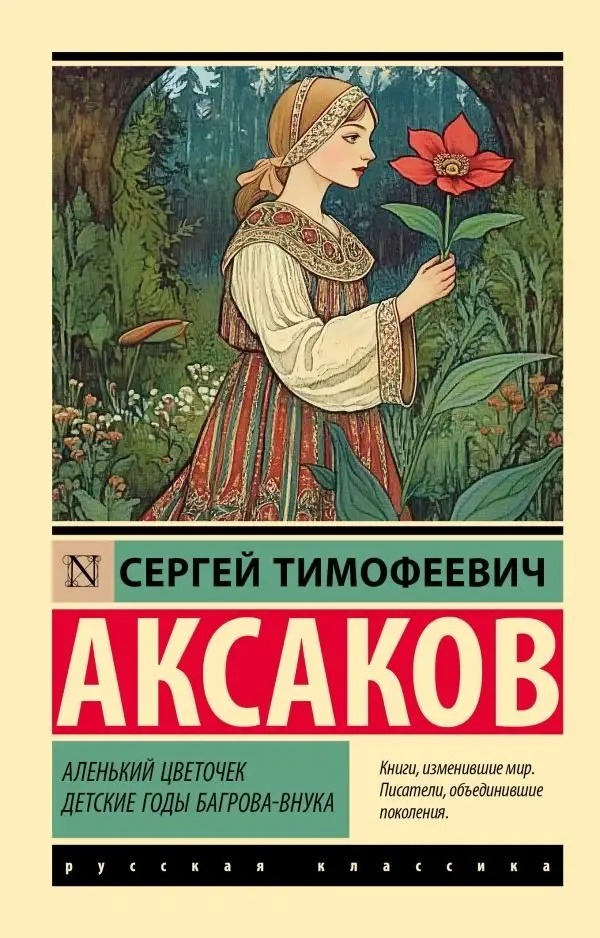
Аленький цветочек. Детские годы Багрова-внука | The Scarlet Flower. Bagrov-Grandson's Childhood Years
By Аксаков Сергей Тимофеевич
Аленький цветочек. Детские годы Багрова-внука
Сергей Аксаков
Обзор
«Аленький цветочек» — одна из наиболее известных русских сказок, многократно адаптированная для сцены и экрана. Она впервые была опубликована в 1858 году как приложение к мемуарам «Детские годы Багрова-внука», которые также включены в это издание. Вторая часть трилогии, «Детские годы Багрова-внука», представляет собой воспитательный роман. В нем автор рассказывает о собственном детстве, фокусируясь на формировании детской души. Аксаков стремился создать книгу для детей, написанную без подражания детскому возрасту, но обращенную к читателям любого возраста.
Кому подойдёт
- Любителям русской классической литературы.
- Читателям, интересующимся темами детства и самопознания.
- Поклонникам сказки «Аленький цветочек».
Ключевые особенности
- Автор: Сергей Аксаков
- Издательство: АСТ
- Серия: Эксклюзив: Русская классика
- Тип обложки: мягкая обложка
- Количество страниц: 448
- Возрастное ограничение: 12+
- Год издания: 2025
- ISBN: 9785171736675
The Scarlet Flower. Bagrov-Grandson's Childhood Years
Sergey Aksakov
Overview
"The Scarlet Flower" is one of the most celebrated fairy tales in Russian literature, frequently adapted for stage and screen. It was first published in 1858 as an appendix to the memoirs "Bagrov-Grandson's Childhood Years," which are also featured in this edition. The second part of the trilogy, "Bagrov-Grandson's Childhood Years," is characterized as a bildungsroman. In it, the writer recounts his own childhood, with the central theme being the formation of a child's soul. Aksakov envisioned writing a book for children that would not mimic childishness but be written as if for adults.
Who it's for
- Readers of Russian classic literature.
- Those interested in themes of childhood and self-discovery.
- Fans of the fairy tale "The Scarlet Flower."
Key features
- Author: Sergey Aksakov
- Publisher: AST
- Series: Exclusive: Russian Classics
- Cover type: Paperback
- Pages: 448
- Age rating: 12+
- Year: 2025
- ISBN: 9785171736675