 US: 2-4 weeks,
  Europe: 1-2 weeks, 🌍 Worldwide: 1-4 weeks ✈️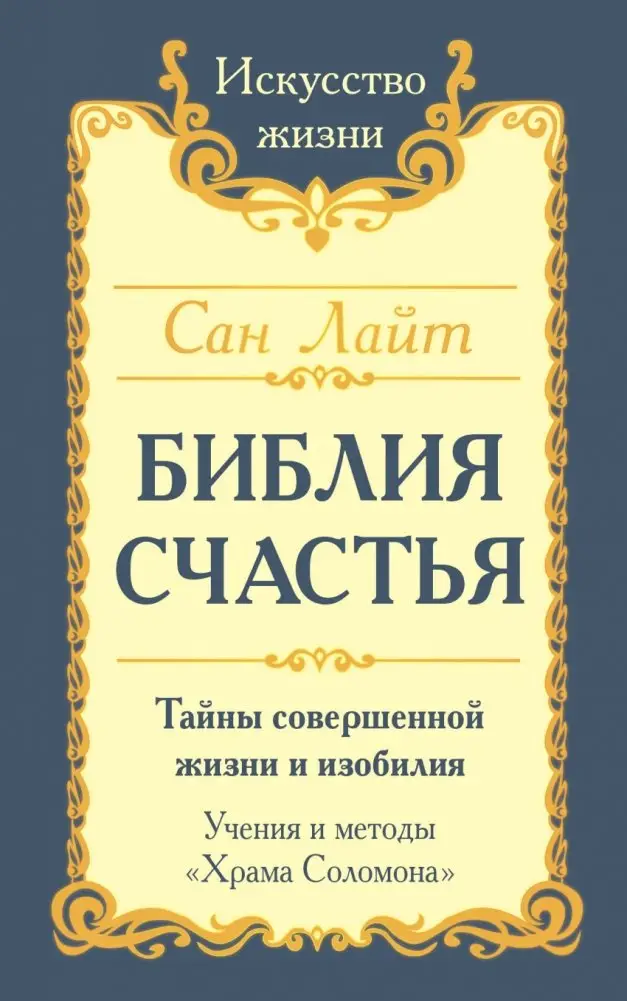
Библия Счастья. Тайны совершенной жизни и изобилия. Учение и методы "Храма Соломона" | The Bible of Happiness: Secrets of a Perfect Life and Abundance
By Сан Лайт
Библия Счастья. Тайны совершенной жизни и изобилия. Учение и методы "Храма Соломона"
Сан Лайт, 2019
Обзор
Эта книга опирается на древний священный текст, известный как «Заповеди счастья», который, по преданию, был обнаружен тамплиерами в XII веке. Сборник содержит наставления и философские максимы, предназначенные для достижения счастья во всех его проявлениях. Согласно традиции, Иисус Назарянин, потомок Соломона, передал эти заповеди своим ученикам. Поскольку язык заповедей символичен и может быть неясен современному читателю, книга предлагает подробные комментарии, разъясняющие их смысл и дух.
Кому подойдёт
- Читателям, интересующимся древними учениями и философией.
- Тем, кто ищет практические методы для обретения счастья и изобилия.
- Людям, изучающим духовные традиции и эзотерические знания.
Ключевые особенности
- Язык: Русский
- Тип обложки: мягкая обложка
- Количество страниц: 128
- ISBN: 9785413018262
- Издательство: Амрита-Русь
- Год издания: 2019
The Bible of Happiness: Secrets of a Perfect Life and Abundance
San Light, 2019
Overview
This book is based on an ancient sacred text, traditionally known as the "Commandments of Happiness," purportedly found by the Knights Templar in the 12th century. These "Commandments" are a concise collection of teachings and philosophical maxims aimed at helping individuals achieve happiness in all its forms. Tradition holds that Jesus of Nazareth, a descendant of Solomon, shared these commandments with his disciples. As the commandments are presented in symbolic language, often difficult for modern readers to grasp, the book provides detailed commentaries to clarify their meaning and spirit.
Who it's for
- Readers interested in ancient wisdom and philosophy.
- Individuals seeking practical methods for achieving happiness and abundance.
- Those exploring spiritual traditions and esoteric knowledge.
Key features
- Language: Russian
- Binding: Softcover
- Pages: 128
- ISBN: 9785413018262
- Publisher: Amrita-Rus
- Year: 2019