 US: 2-4 weeks,
  Europe: 1-2 weeks, 🌍 Worldwide: 1-4 weeks ✈️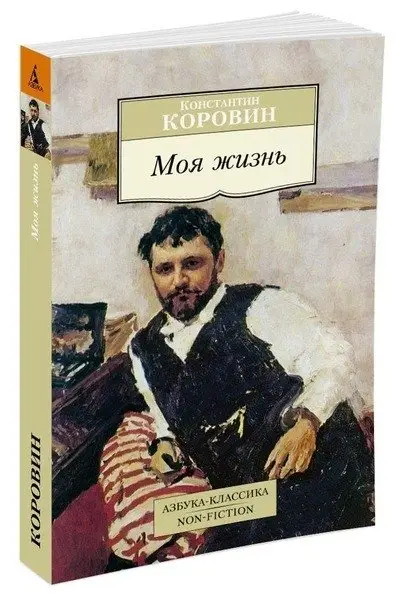
Моя жизнь | My Life
By Коровин Константин Алексеевич
Моя жизнь
Константин Коровин
Обзор
Константин Коровин, выдающийся пейзажист, портретист и театральный декоратор, стоявший у истоков русского импрессионизма, оставил значительное художественное и литературное наследие. Его жизнь совпала с эпохой бурных исторических событий, а судьба свела с множеством ярких личностей — художников, актеров, меценатов, ставших его друзьями. Находясь в эмиграции, Коровин завершил свои мемуары и написал рассказы, с пронзительной искренностью запечатлев Россию и дорогих ему людей. Его проза, отличающаяся живописностью, демонстрирует несомненный литературный талант.
Кому подойдёт
- Любителям мемуаров и биографий деятелей искусства.
- Интересующимся историей русского искусства начала XX века.
- Ценителям творчества Константина Коровина.
Ключевые особенности
- Язык: Русский
- Страниц: 288
- Тип обложки: мягкая обложка
- Издательство: Азбука
- Серия: Азбука-Классика. Non-Fiction
- Год издания: 2021
- ISBN: 9785389124233
My Life
Konstantin Korovin
Overview
Konstantin Korovin, a brilliant master of landscape painting, a remarkable portraitist, and a theatrical designer, who founded Russian Impressionism, left behind a significant artistic and literary legacy. His life unfolded during a period rich with historical events, and fate brought him together with outstanding figures of his time—artists, actors, theatrical figures, and patrons, many of whom became his close friends. While in emigration, longing for his homeland, Korovin completed his memoirs, begun in the early years of the revolution, and wrote stories capturing the Russia he cherished and the people he loved and remembered with piercing truth and simplicity. His stories are typically autobiographical, remarkably "picturesque," and attest to his undeniable literary talent.
Who it's for
- Readers interested in memoirs and biographies of artists.
- Those curious about the history of Russian art in the early 20th century.
- Admirers of Konstantin Korovin's work.
Key features
- Language: Russian
- Pages: 288
- Cover type: Softcover
- Publisher: Azbuka
- Series: Azbuka-Classics. Non-Fiction
- Publication Year: 2021
- ISBN: 9785389124233