 US: 2-4 weeks,
  Europe: 1-2 weeks, 🌍 Worldwide: 1-4 weeks ✈️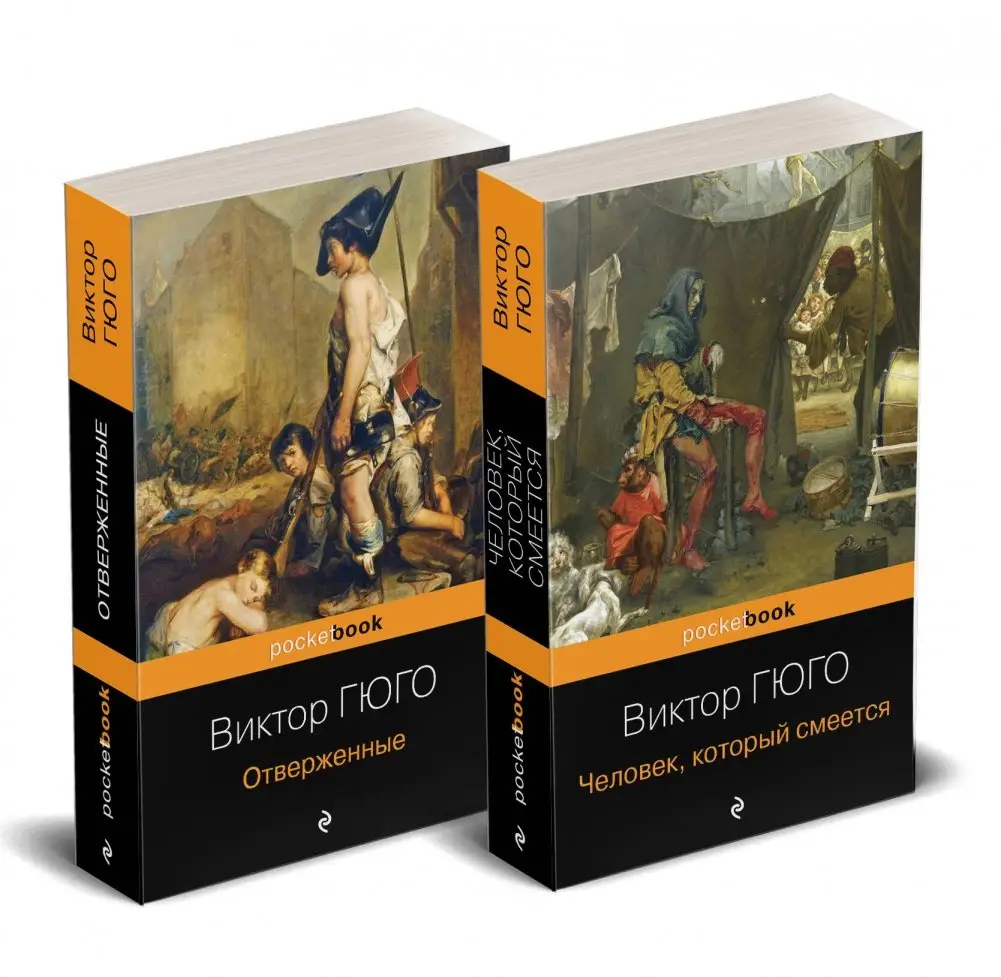
Набор "Отверженные и изгнанные: два шедевра Виктора Гюго" (комплект из 2 книг: Отверженные и Человек, который смеется) | Les Misérables and The Man Who Laughs: Two Masterpieces by Victor Hugo
By Гюго Виктор
Набор "Отверженные и изгнанные: два шедевра Виктора Гюго"
Виктор Гюго
Обзор
В комплект входят два знаковых романа Виктора Гюго: "Отверженные" и "Человек, который смеется". "Отверженные" погружают в историю Франции с 1815 по 1832 год, критикуя социальное неравенство и политику Реставрации. Роман оживает благодаря реальным историческим событиям и личностям, рассказывая о судьбах Жана Вальжана, Козетты и Гавроша на фоне парижских восстаний и политических споров. "Человек, который смеется" переносит читателя в Англию конца XVII – начала XVIII веков, повествуя о Гуинплене, лорде по рождению, превращенном в шута с вырезанной маской смеха на лице, который, несмотря на испытания, сохраняет свои лучшие качества и любовь.
Кому подойдёт
- Любителям классической французской литературы.
- Интересующимся историей Франции XIX века.
- Тем, кто ценит глубокие социальные и философские темы.
- Поклонникам творчества Виктора Гюго.
Ключевые особенности
- Язык: Русский
- Количество страниц: 1440
- Тип обложки: Мягкая
- Издательство: Эксмо
- Серия: Pocket book (обложка). Комплекты
- Штрих код: 9785042286469
Les Misérables and The Man Who Laughs: Two Masterpieces by Victor Hugo
Victor Hugo
Overview
This set features two seminal novels by Victor Hugo: "Les Misérables" and "The Man Who Laughs". "Les Misérables" spans French history from 1815 to 1832, critiquing the social conditions and politics of the Restoration era. It draws on real historical events and figures, detailing the lives of Jean Valjean, Cosette, and Gavroche amidst Parisian uprisings and political debates. "The Man Who Laughs" transports readers to late 17th and early 18th century England, telling the story of Gwynplaine, a nobleman by birth who was sold to bandits and disfigured with a mask of a permanent grin, yet retains his humanity and love through his trials.
Who it's for
- Readers of classic French literature.
- Those interested in 19th-century French history.
- Individuals who appreciate profound social and philosophical themes.
- Fans of Victor Hugo's work.
Key features
- Language: Russian
- Pages: 1440
- Binding: Softcover
- Publisher: Eksmo
- Series: Pocket book (cover). Sets
- ISBN: 9785042286469