 US: 2-4 weeks,
  Europe: 1-2 weeks, 🌍 Worldwide: 1-4 weeks ✈️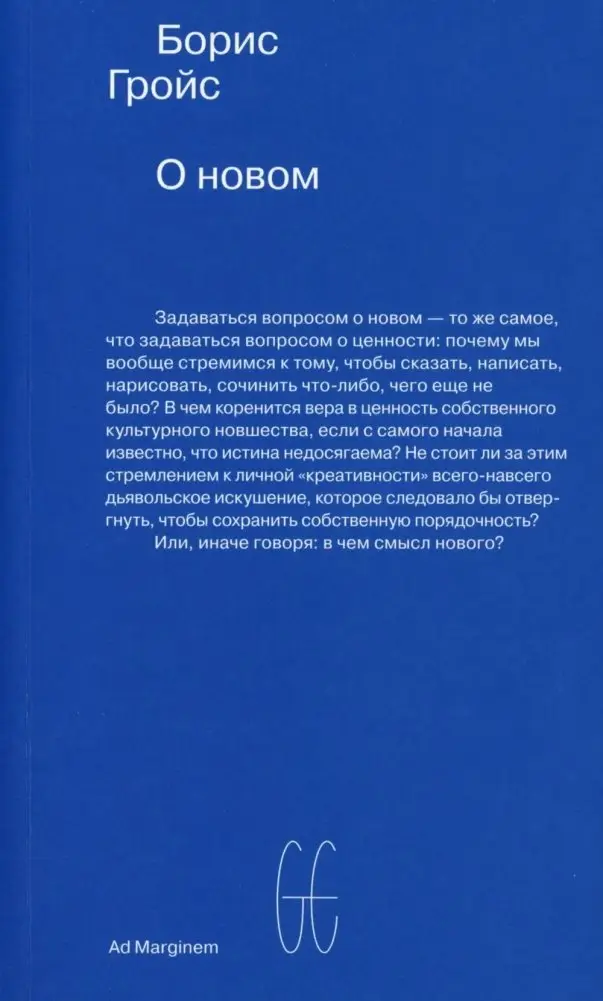
О новом. Опыт экономики культуры | On the New: An Experience of Cultural Economics
By Гройс Борис
О новом. Опыт экономики культуры
Борис Гройс, 2025
Обзор
В своей работе «О новом» искусствовед и философ Борис Гройс исследует, как создавать произведения искусства, обладающие культурной ценностью в эпоху постмодерна. Автор анализирует «культурную экономику» на примере реди-мейда Дюшана, рассматривая обмен между архивом культурных ценностей и внешним пространством. Гройс утверждает, что инновация является актом негативного следования традиции, переводя обыденное в культурный контекст и изменяя соотношение старого и нового.
Кому подойдёт
- Интересующимся философией искусства и культурологией.
- Исследователям постмодернизма и современных культурных процессов.
- Тем, кто изучает теорию искусства и экономику культуры.
Ключевые особенности
- Язык: русский
- Страниц: 224
- Тип обложки: мягкая обложка
- Издательство: Ад Маргинем Пресс
- Год издания: 2025
- ISBN: 9785911038359
On the New: An Experience of Cultural Economics
Boris Groys, 2025
Overview
In his seminal work "On the New," art historian and philosopher Boris Groys delves into the creation of culturally valuable art in the postmodern era. Using Duchamp's readymade as a case study, Groys examines the "cultural economy," exploring the exchange between the archive of cultural values and the profane space outside it. He posits that innovation is an act of negative adherence to tradition, which shifts the ordinary from everyday life into a cultural context, thereby altering the dynamic between the old and the new.
Who it's for
- Individuals interested in the philosophy of art and cultural studies.
- Researchers of postmodernism and contemporary cultural phenomena.
- Students and scholars of art theory and cultural economics.
Key features
- Language: Russian
- Pages: 224
- Cover type: Softcover
- Publisher: Ad Marginem Press
- Publication year: 2025
- ISBN: 9785911038359