 US: 2-4 weeks,
  Europe: 1-2 weeks, 🌍 Worldwide: 1-4 weeks ✈️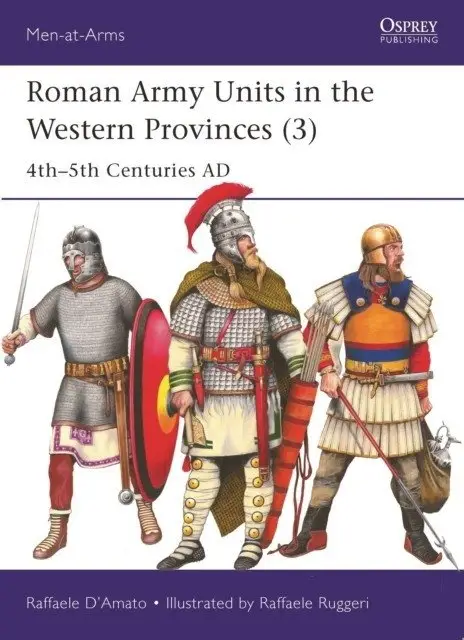
Римская армия в Западных провинциях (3) | Roman Army Units in the Western Provinces (3)
Римская армия в Западных провинциях (3)
Raffaele D’Amato, 2024
Обзор
Эта книга представляет собой полностью иллюстрированное описание масштабной реорганизации Римской армии, произошедшей с правления императора Диоклетиана до падения Западной Римской империи в 476 году н.э. После хаоса середины III века н.э. императоры Диоклетиан и Константин I провели значительные административные реформы для улучшения оборонительной стратегии. Структура армии изменилась: легионы и вспомогательные подразделения уступили место мобильным полевым армиям и гарнизонным войскам. Также возросло число наемников из числа «варваров» и их продвижение на командные должности.
Кому подойдёт
- Интересующимся военной историей Римской империи.
- Исследователям позднеримского периода.
- Любителям военной археологии.
Ключевые особенности
- Язык: Английский
- Тип обложки: Paperback
- Год издания: 2024
- Количество страниц: 48
- ISBN: 9781472862686
- Издательство: MPS
Roman Army Units in the Western Provinces (3)
Raffaele D’Amato, 2024
Overview
This fully illustrated account details the large-scale reformation of the Roman Army from the reign of Diocletian to the fall of the Western Empire in AD 476. Following the chaos of the mid-3rd century AD, Emperors Diocletian and Constantine I implemented major administrative reforms to enhance defensive strategy. The army's structure was reorganized, shifting from legions and auxiliary units to mobile field armies and various classes of garrison troops. Additionally, recruitment of 'allied barbarians' increased significantly, with some even reaching senior command positions.
Who it's for
- Readers interested in Roman military history.
- Students of the late Roman Empire.
- Military history enthusiasts.
Key features
- Language: English
- Cover type: Paperback
- Year: 2024
- Pages: 48
- ISBN: 9781472862686
- Publisher: MPS