 US: 2-4 weeks,
  Europe: 1-2 weeks, 🌍 Worldwide: 1-4 weeks ✈️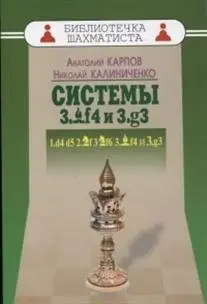
Системы 3.Cf4 и 3.g3 | The 3.Cf4 and 3.g3 Systems
By Карпов Анатолий Евгеньевич, Калиниченко Николай Михайлович
Системы 3.Cf4 и 3.g3
Анатолий Евгеньевич Карпов, Николай Михайлович Калиниченко, 2015, Серия: Библиотечка шахматиста
Обзор
Данный выпуск серии "Библиотечка шахматиста" исследует дебютные варианты в шахматах, возникающие после ходов 1.d4 d5 2.Kf3. В первой главе рассматривается ситуация, когда ответ 2...Kf6 находится под запретом. Вторая глава посвящена продолжению 2...Kf6 3.Cf4, а третья анализирует вариант 2...Kf6 3.g3. Книга предлагает глубокий анализ этих специфических шахматных построений.
Кому подойдёт
- Шахматистам, изучающим дебютные стратегии.
- Игрокам, интересующимся вариантами после 1.d4 d5.
- Любителям шахматной теории и анализа.
Ключевые особенности
- Язык: Русский
- Количество страниц: 144
- Тип обложки: мягкая обложка
- Издательство: Русский шахматный дом
- Год издания: 2015
- ISBN: 9785946933070
The 3.Cf4 and 3.g3 Systems
Anatoly Evgenievich Karpov, Nikolay Mikhailovich Kalinichenko, 2015, Series: Chess Player's Library
Overview
This installment of the "Chess Player's Library" series delves into chess opening variations that arise after the moves 1.d4 d5 2.Nf3. The first chapter examines a scenario where the response 2...Nf6 is restricted. The second chapter focuses on the continuation 2...Nf6 3.Cf4, while the third analyzes the 2...Nf6 3.g3 variation. The book offers in-depth analysis of these specific chess structures.
Who it's for
- Chess players studying opening strategies.
- Players interested in variations after 1.d4 d5.
- Enthusiasts of chess theory and analysis.
Key features
- Language: Russian
- Pages: 144
- Binding: Softcover
- Publisher: Russian Chess House
- Year: 2015
- ISBN: 9785946933070