 US: 2-4 weeks,
  Europe: 1-2 weeks, 🌍 Worldwide: 1-4 weeks ✈️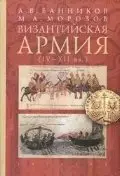
Византийская армия (IV-XII вв.) | The Byzantine Army (4th-12th Centuries)
By Банников Андрей Валерьевич , …
Византийская армия (IV-XII вв.)
Банников А.В., Морозов М.А., 2018
Обзор
Книга посвящена армии Византийской империи, одного из самых могущественных государств Средневековья, чье влияние простиралось на Европу, Азию и Африку. Наследуя античные военные традиции, византийская армия постоянно эволюционировала. Она гармонично синтезировала греко-римские элементы с заимствованиями у противников, адаптируя лучшие технические и тактические достижения. Авторы детально рассматривают вопросы комплектования, вооружения, тактического деления и приемов ведения боя.
Кому подойдёт
- Специалистам по военной истории Античности и Средневековья.
- Всем, кто интересуется развитием военных структур и тактик.
- Читателям, желающим понять роль Византийской империи в средневековом мире.
Ключевые особенности
- Язык: Русский
- Год издания: 2018
- Издательство: Евразия
- Тип обложки: твердый переплёт
- Количество страниц: 688
- ISBN: 9785918521083
The Byzantine Army (4th-12th Centuries)
Andrey Bannikov, M.A. Morozov, 2018
Overview
This book examines the army of the Byzantine Empire, a dominant medieval power that significantly influenced events across Europe, Asia, and Africa. While inheriting ancient military traditions, the Byzantine army was not static; it evolved by integrating foreign tactical and technical advancements. The authors explore its recruitment, weaponry, tactical organization, and combat methods, presenting a comprehensive picture of this influential military force. The work reflects a synthesis of Greco-Roman heritage with external influences.
Who it's for
- Specialists in ancient and medieval military history.
- Individuals interested in the evolution of military structures and tactics.
- Readers seeking to understand the Byzantine Empire's military role.
Key features
- Language: Russian
- Year: 2018
- Publisher: Eurasia
- Binding: hardcover
- Pages: 688
- ISBN: 9785918521083