 US: 2-4 weeks,
  Europe: 1-2 weeks, 🌍 Worldwide: 1-4 weeks ✈️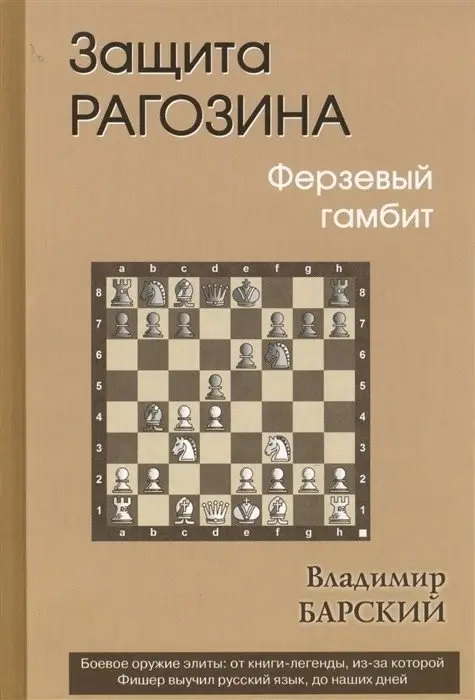
Защита Рагозина. Ферзевый гамбит | Ragozin Defense: Queen's Gambit
By Барский Владимир Леонидович
Защита Рагозина. Ферзевый гамбит
Барский Владимир Леонидович, 2012
Обзор
Книга международного мастера Владимира Барского посвящена "Защите Рагозина", популярному современному шахматному дебюту. Основные идеи и варианты разбираются на основе 65 теоретически значимых партий. В начале книги помещена статья Исаака Липницкого "Как изучать конкретный дебют". Основной материал разделен на семь глав для удобства изучения. Партии приводятся целиком, демонстрируя типовые приемы игры в миттельшпиле и эндшпиле. Современное состояние теории дебюта раскрывается в примечаниях к ходам.
Кому подойдёт
- Шахматистам, желающим освоить актуальный боевой дебют за черных.
- Игрокам, ищущим эффективные ответы на "Защиту Рагозина" белыми.
- Любителям шахматной теории и анализа партий.
Ключевые особенности
- Язык: Русский
- Тип обложки: твердый переплет
- Количество страниц: 360
- ISBN: 9785990235236
- Издательство: Русский шахматный дом
- Год издания: 2012
Ragozin Defense: Queen's Gambit
Vladimir Leonidovich Barsky, 2012
Overview
This book by International Master Vladimir Barsky focuses on the "Ragozin Defense," a popular modern chess opening. The core ideas and variations are analyzed using 65 theoretically significant games. The book begins with Isaac Lipnitsky's article "How to Study a Specific Opening." The main content is divided into seven chapters for ease of study. Complete games are included to illustrate typical middlegame and endgame play. The current state of opening theory is explored in move annotations.
Who it's for
- Chess players looking to master an effective fighting opening as Black.
- Players seeking strong responses to the "Ragozin Defense" with White.
- Enthusiasts of chess theory and game analysis.
Key features
- Language: Russian
- Binding: Hardcover
- Pages: 360
- ISBN: 9785990235236
- Publisher: Russian Chess House
- Year: 2012